est. 2006
Welcome to the Hillgrove Orchestra website. Please click on the tabs above to see more about our program.
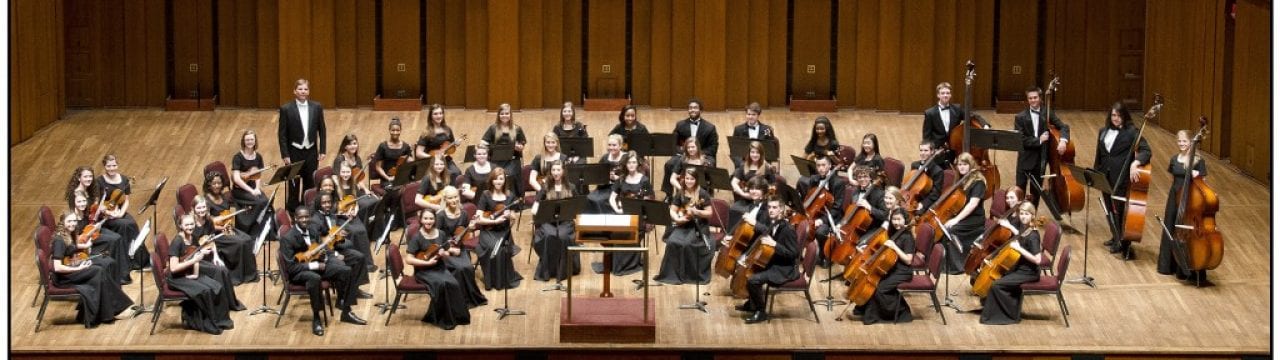
Hillgrove High School was opened in the Fall of 2006, and is a part of the Cobb County School System. Hillgrove is located in Powder Springs, Georgia, a northwest suburb of Atlanta. Dr. David Doke is the founding director of the orchestra program at Hillgrove. Beginning with the first concert at Hillgrove in 2006, The Hillgrove Orchestras have established a tradition of excellence. Hillgrove has performed at some of the most prestigious concert halls and venues around the world, including the Kennedy Center for Performing Arts in Washington, Orchestra Hall in Chicago, Carnegie Hall in New York, and concert tours of China and France.
Our students regularly participate in extra-curricular orchestra activities outside of school. These include the Georgia Youth Symphony, The Emory Youth Symphony, the Atlanta Symphony Youth Orchestra, the Atlanta Music Project, GMEA District Honor Orchestra and GMEA All-State Orchestra. Our alumni have gone on to study at music schools including Kennesaw State University, the University of Georgia, Middle Tennessee State University, the Berklee School of Music in Boston, the Cleveland Institute of Music, the Jacob School of Music at the University of Indiana, and the Royal Academy of Music in London.
There are currently more than 130 students in the orchestra program at Hillgrove. Students are placed in one of three orchestras based upon auditions in the spring. Orchestra placement is not dependent upon what grade the student is in, but rather on the skill level of the student. This is to ensure that the student is placed in the appropriate class each year.
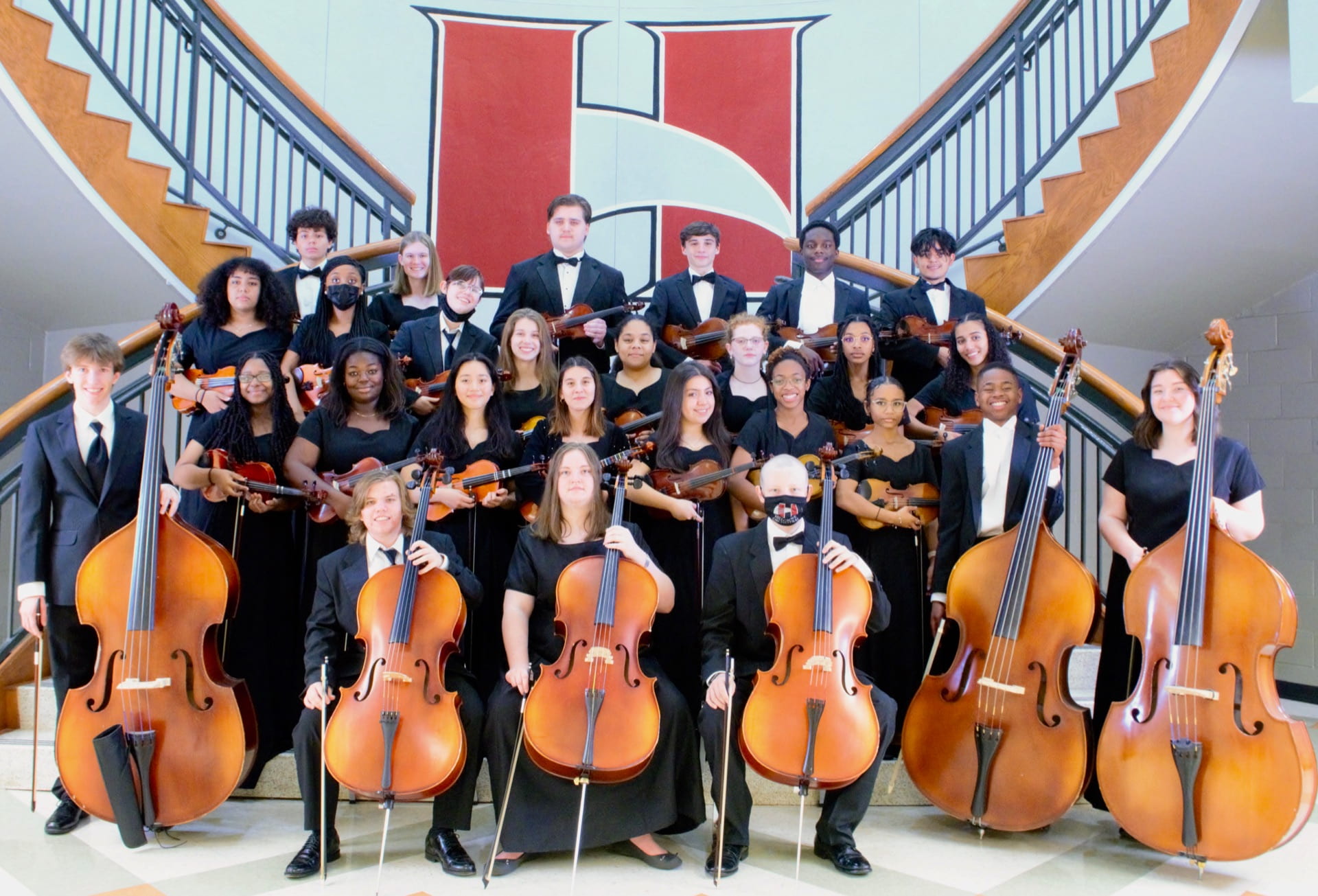
The Intermediate Orchestra is primarily composed of students that have had a minimum of three years of middle school orchestra experience. Students may also be placed in the Advanced or Mastery Orchestras based upon middle school teacher recommendations and auditions in the Spring and Fall. The Intermediate Orchestra performs 4-6 concerts each year. Students in this orchestra will perform grade 3-4 literature and will learn vibrato, shifting to 2nd and 3rd positions, advanced bowing techniques, sight-reading, basic music theory and how to rehearse in an efficient, professional manner.
Hillgrove HS Intermediate Orchestra

The Advanced Orchestra performs 4-6 concert each year. Students in the Advanced Orchestra are generally grades 10-12 and perform music graded 4-5. These students understand cultural and historical aspect of music, and are comfortable playing 3 octave scales up to 7th position. Students in this orchestra will also learn how to rehearse in an efficient, professional manner.
Hillgrove HS Advanced Orchestra
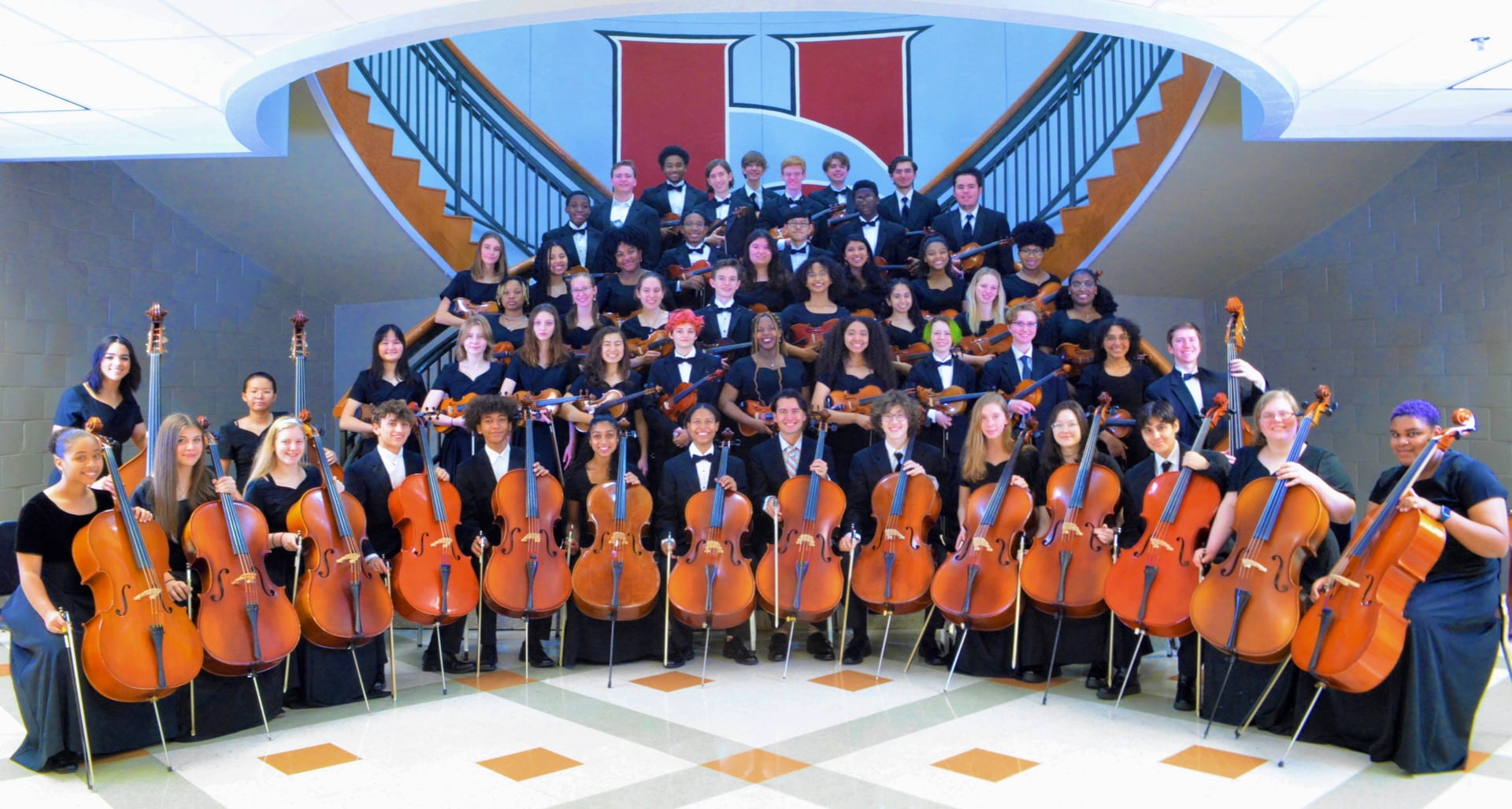
The Mastery Orchestra performs 10-12 concerts each year and frequently travels to perform at national or international festivals each Spring. Students in the Mastery Orchestra also participate as members of the Hillgrove Symphony, collaborating with members of the Hillgrove Wind Symphony and Chorus. Students in the Mastery Orchestra have demonstrated an ongoing commitment to the program and must be registered for the entire year. Mastery Orchestra students will demonstrate a mastery of their instrument including 3 octave scales, advanced bowing techniques, sight-reading, performing grade 6 music and rehearsing in an efficient, professional manner.
Hillgrove HS Mastery Orchestra
Notable Highlights of the Hillgrove Orchestra Program
- In April 2022 the Hillgrove Symphony performed art the National Band and Orchestra Festival at Carnegie Hall.
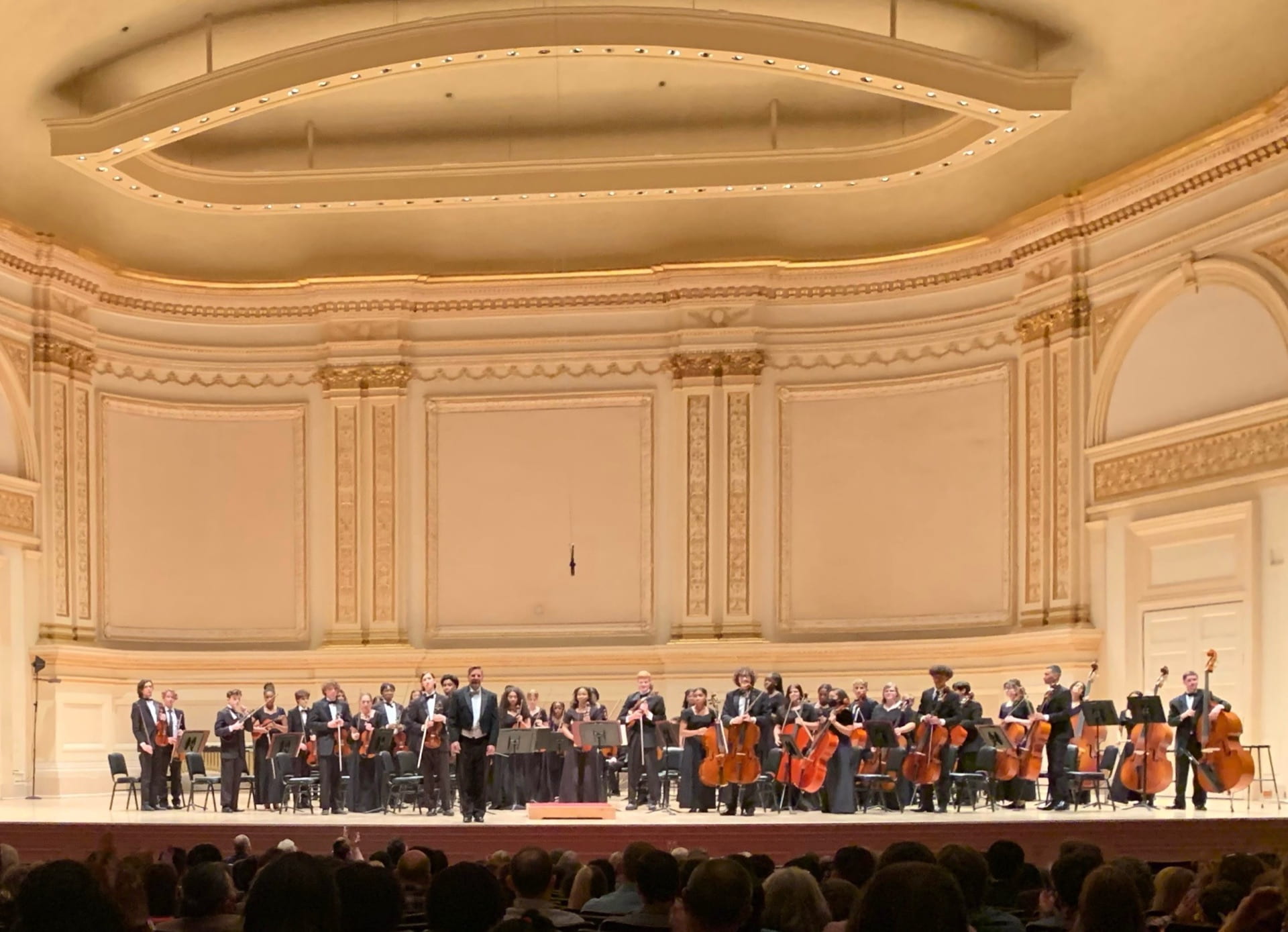
Hillgrove Symphony at Carnegie Hall – April 2022
- In April 2020, the Hillgrove Festival Chamber Orchestra was invited to travel to San Francisco for performances at Davies Hall. Unfortunately, the trip was canceled due to the Covid-19 pandemic.
- In June 2019 the Hillgrove Instrumental Music Department traveled to Normandy and Paris, France to perform for the 75th Anniversary of the D-Day landings in Normandy.

Hillgrove Orchestra at the Eiffel Tower in Paris, France

Hillgrove Bands and Orchestras at the American Cemetery in Normandy, France

Hillgrove Orchestra at the American Cemetery in Normandy, France
- 2017 – The Hillgrove Symphony Orchestra performed at Carnegie Hall as part of the National Invitational Band and Orchestra Festival. This marked Hillgrove’s third performance at Carnegie Hall.

Hillgrove at Carnegie Hall – June 2017
- 2016 – The Hillgrove Bands and Orchestras travelled to Beijing and Shanghai, China for a 10-day concert tour. The tour was sponsored by the US-China Cultural and Educational Foundation, and Hillgrove was only the third high school in the nation to participate in the program.
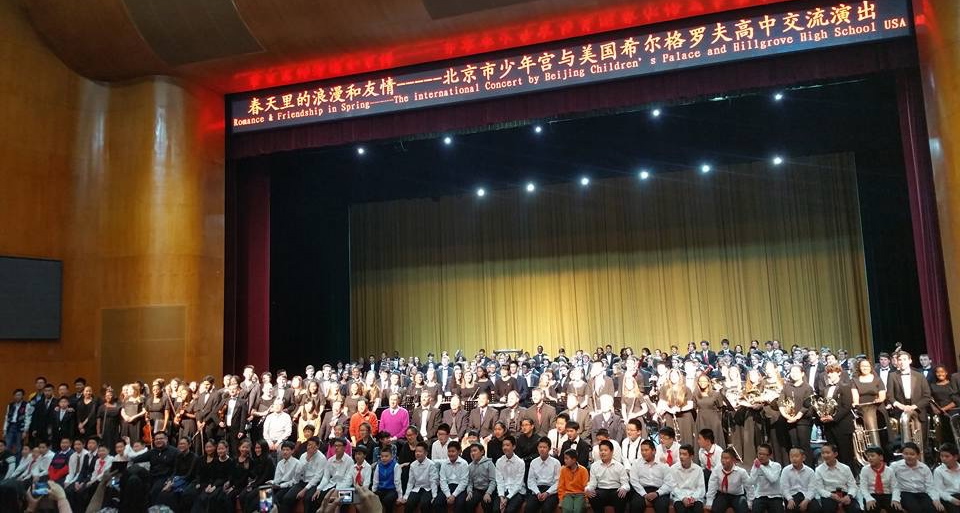 Hillgrove at the Children’s Palace in Beijing, China
- 2015 – The Hillgrove Mastery Orchestra performed at the Georgia Music Educators Association State In-Service Conference. This marked the second time that Hillgrove was selected for the conference.
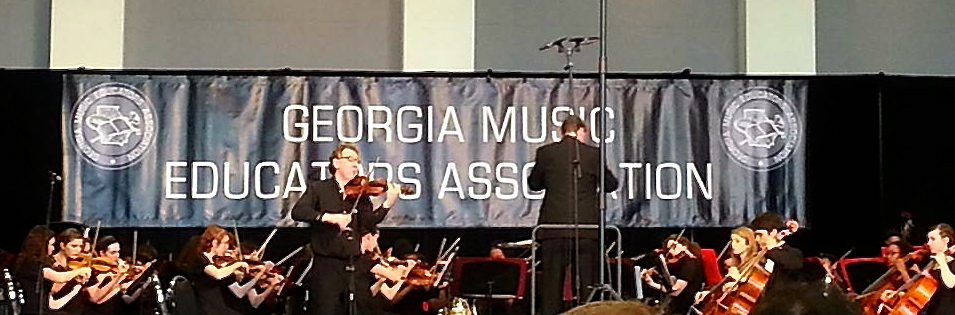
GMEA 2015 with Dr. Michael Heald
- 9/11/14 – The Hillgrove Symphony, Choruses and Bands collaborated to present a 9/11 Memorial Concert at Kennesaw State University, raising money for the Wounded Warrior Project.

Hillgrove Symphony and Choir
- 2014 – The Hillgrove Mastery Orchestra performed at the National Invitational Band and Orchestra Festival at Carnegie Hall in New York for the second time in four years.
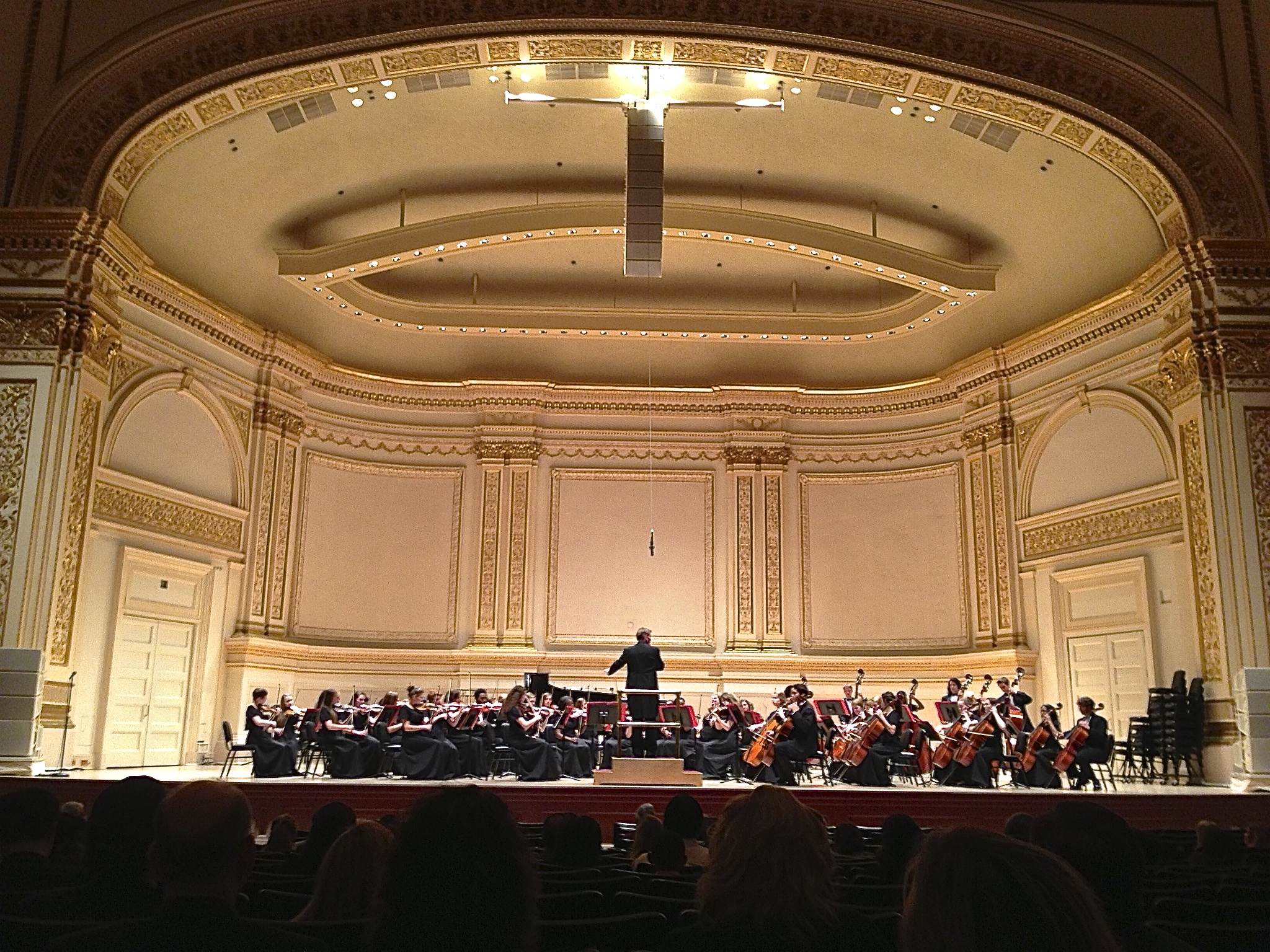
Hillgrove Festival Orchestra performing at Carnegie Hall in 2014.
- 2013 – The Hillgrove Festival Orchestra performed at the Kennedy Center for the Performing Arts in Washington as part of the National Invitational Band and Orchestra Festival. Hillgrove received the highest score of the festival and was invited to perform an evening encore performance at the Kennedy Center.
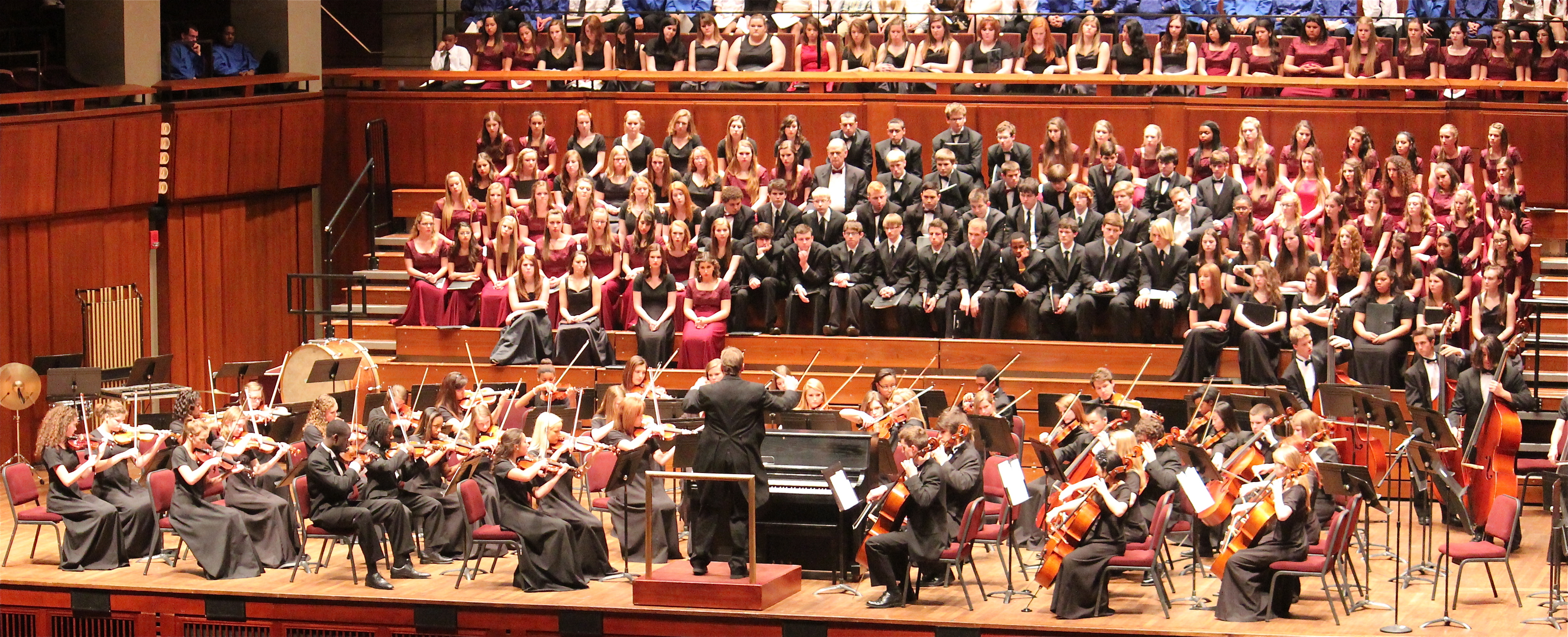
Hillgrove Performing Tchaikovsky at the Encore Concert at the Kennedy Center in 2013.
- 2012 – Hillgrove performed at the National Invitational Band and Orchestra Festival at Orchestra Hall in Chicago.

Hillgrove Festival Orchestra at Orchestra Hall Chicago Symphony Center in 2013.
- 2011 – Hillgrove performed at the National Invitational Band and Orchestra Festival at Carnegie Hall in New York.
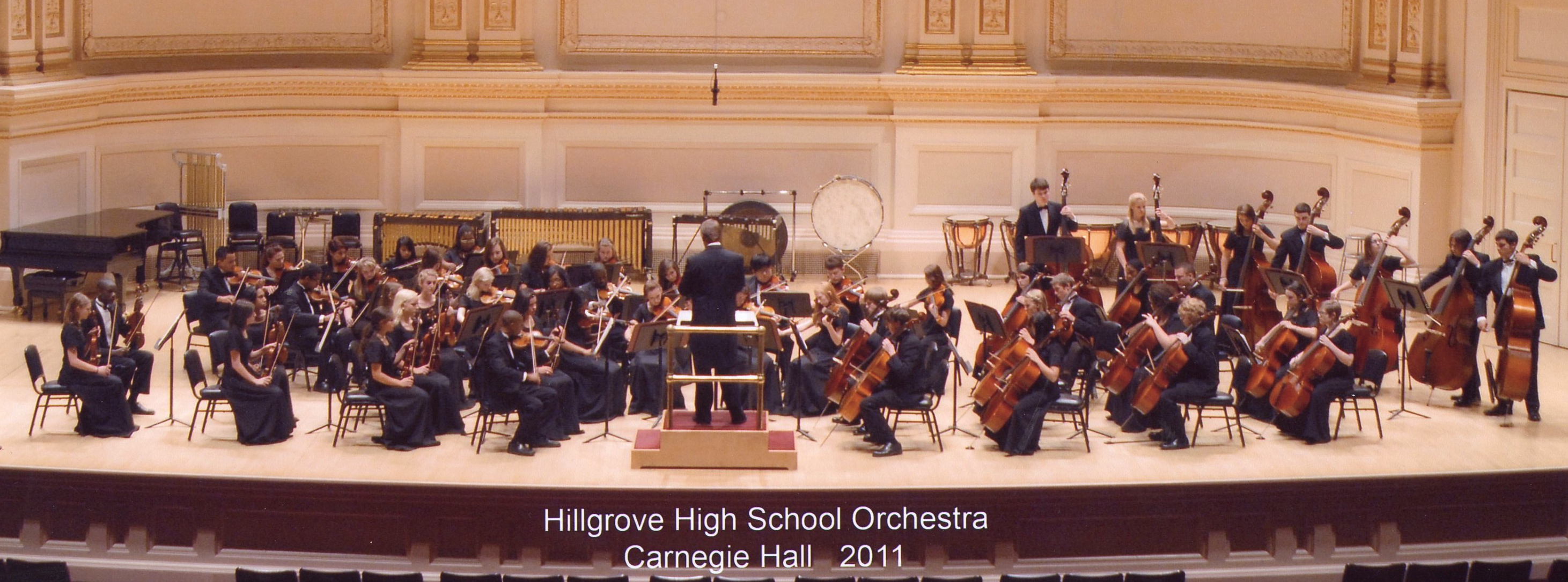
Carnegie Hall 2011

Award plaque from Carnegie Hall performance
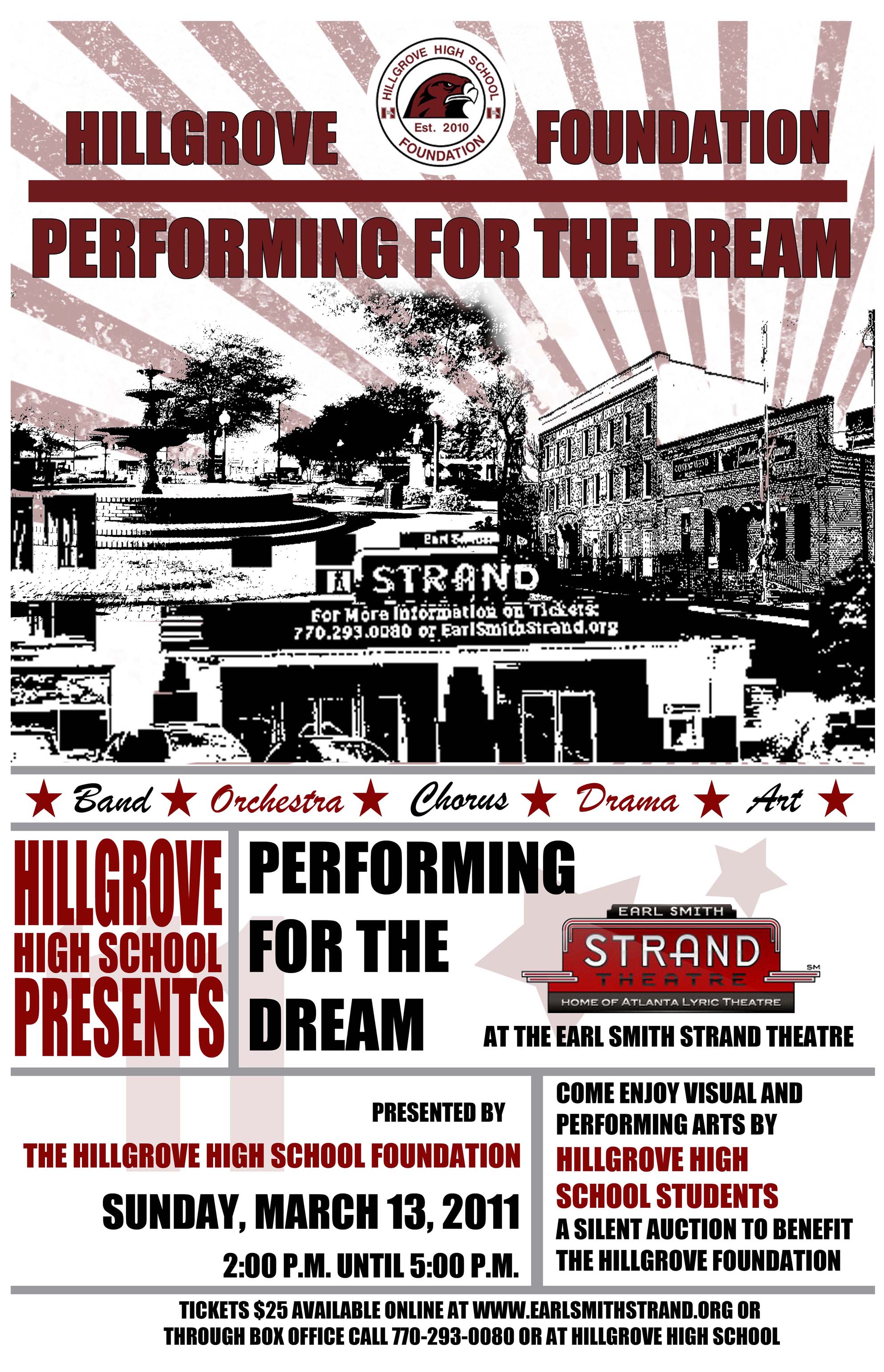
Performing for the Dream
- In March of 2011 – The Hillgrove Orchestra and the entire Fine Arts Department was showcased in the “Performing for the Dream” Concert at the Strand Theater on the Marietta square, supporting the Hillgrove Foundation. The “Performing for the Dream” Concert is now an annual event, earning thousands of dollars for the Hillgrove Foundation.

- Hillgrove Orchestra at 2010 GMEA State Conference in Savannah
- 2010 – The Hillgrove Orchestra performed at the Georgia Music Educators State Conference in Savannah, Georgia.
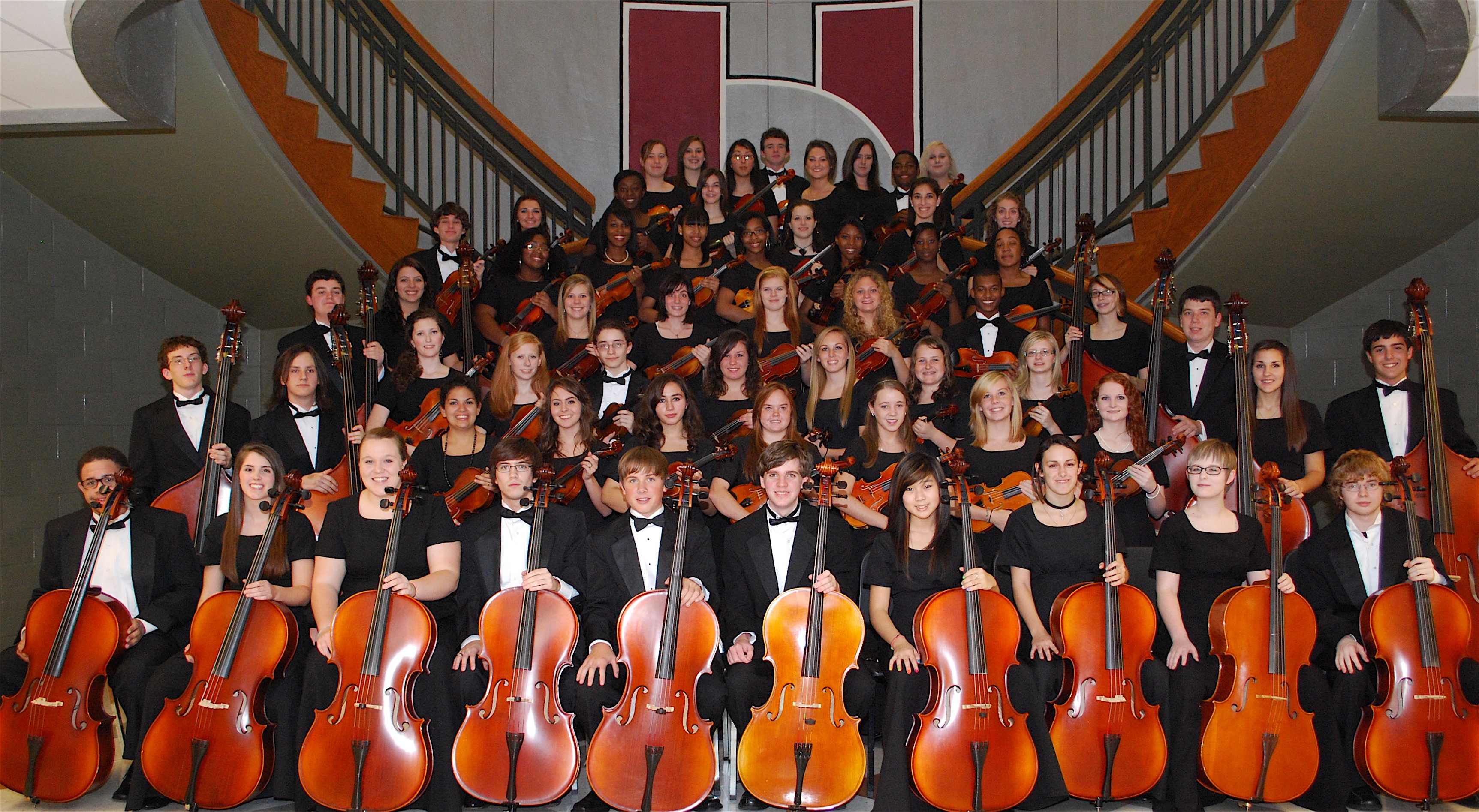
2010 Hillgrove GMEA Group Photo
- 2008 – the Hillgrove Festival Orchestra traveled to Williamsburg, Virginia and Washington, DC to perform at the Heritage Music Festival, and was awarded the festival’s “Outstanding String Orchestra Award.”
- In each year of participation at the GMEA Large Group Performance Evaluation, the Hillgrove Orchestras have earned overall “Superior” ratings.
- Locally, the Hillgrove Orchestras have performed on several occasions at the Georgia Governor’s Mansion, the Cobb County School District Retirement Luncheon, the Hillgrove Senior Project Dinner, The Annual Orchestra Dinner Theater, Performing for the Dream and many other public events.
Hillgrove orchestra students regularly perform with the Georgia Youth Symphony, the Atlanta Symphony Youth Orchestra, the Metropolitan Youth Orchestra, Emory Youth Symphony, District Honor Orchestra and Georgia All-State Orchestra. Hillgrove orchestra students have also attending summer music institutes such as Brevard Music Center, Sewanee Summer Music Festival, UGA Summer Institute, Emory University Encore Camp and KSU Summer Clinic. Orchestra graduates have gone on to study at colleges such as The Cleveland Institute of Music, Indiana Jacobs School of Music, UGA, Georgia Tech, Auburn, Oglethorpe, Georgia State, Emory University, SCAD, Berklee School of Music, Vanderbilt, and Fordham among others.
The Fine Arts Department at Hillgrove includes the Concert Bands and the Hillgrove Marching Band, under the direction of Mr. Patrick Erwin and Mr. Jeremey Lumpkin. Hillgrove’s Choral Department is under the direction of Ms. Erica Palmer, Sara Strickler teach Visual Arts, and Adam Sechelski teaches Drama.